
 Deutsch
 Português
 한국어
 Türkçe
 عربي
 русский
 Việt Nam
 日本語
 Italiano
 Français
 Español

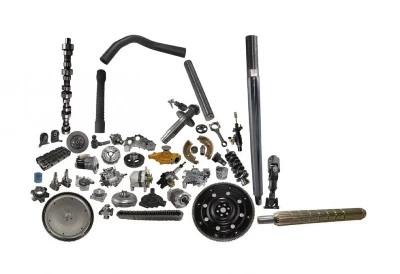
Forklift parts are essential components that enable the functionality of forklifts. Each part serves a specific purpose, contributing to the overall operation, safety, and efficiency of the equipment. Understanding the functions of forklift parts is crucial for proper maintenance, operation, and troubleshooting. This knowledge helps ensure the smooth running of forklifts, reducing downtime and enhancing productivity in various industries that rely on these machines for material handling.
contents
1.Forklift parts and their functions
2.Mast assembly: the core of cargo handling
3.Different types of forklifts: adapt to various work needs
4.Forklift accessories: Expanding the functional boundaries of forklifts
5.Forklift inspection safety measures: the key to ensuring operational safety
1.Forklift parts and their functions
Chassis components: the solid foundation of a forklift
The chassis of a forklift is like the frame of a truck. It is the foundation of the entire vehicle and carries many important components. These components include the engine or battery that powers the forklift, the cab that ensures the operator's working environment, the counterweight that maintains the balance of the vehicle, and the wheels that enable the mobile function.
Cab: the operator's workspace
The forklift operator's cab is the exclusive area where the operator controls the forklift. Depending on the type of forklift, the operator's operating posture also varies, and it is possible to sit or stand. All necessary operating controls such as lights, horns, steering wheels, etc. are integrated in the cab, which provides the operator with convenient and precise control means.
Overhead guard: a safe and solid shield
The overhead guard, scientifically known as the falling object protection structure (FOPS), is an indispensable safety configuration for forklifts. Like a loyal guard, it is installed on the top of the vehicle and can effectively block objects or debris falling from above, providing reliable protection for the head safety of the forklift operator.
Controls: the command center of operation
Before operating a forklift, the operator must have a deep understanding and mastery of the specific manual content of the forklift he is operating. Different types of forklifts may have different controls in position and function. However, most forklifts have some common controls:
Forward and reverse control: This control gives the operator the ability to move the forklift forward or backward, and is the key to achieving horizontal movement of the forklift.
Hydraulic lift control: Usually three controls work together, with which the operator can flexibly control the up and down movement, tilt angle, and left and right displacement of the fork to meet the needs of different cargo handling.
Accelerator and brake pedals: During the driving process of the forklift, the operator uses these two pedals to achieve acceleration and braking operations to ensure the controllability and safety of the vehicle's running speed.
Parking brake: Used for braking when the forklift is parked to prevent the vehicle from sliding accidentally. Especially when parking on a slope, the stability of the vehicle can be further enhanced by blocking the forklift tires with a block.
Nameplate: Also known as a data plate or capacity plate, although it is small in size, it contains a wealth of information, such as the capacity, model, serial number, weight, mast height, and load center of the forklift. It is crucial for the operator to understand the nameplate information to accurately grasp the performance of the forklift and judge whether it is suitable for the current work task.
Engine or battery compartment: the source of power
The power source of the forklift mainly comes from the engine and battery. Forklifts with internal combustion engines are usually fueled by propane, gasoline or diesel; while electric forklifts are driven by rechargeable batteries. Generally, these power sources are placed under the operator's seat, which not only ensures the stability of the vehicle's center of gravity, but also facilitates daily maintenance and inspection.
Counterweight: the guardian of balance
The counterweight is a key component for the forklift to maintain balance and stability. When the forks on the forklift carry goods, the weight distribution of the vehicle will change significantly. At this time, the counterweight placed at the rear of the lift plays an important role. It can effectively offset the torque generated by the weight of the goods, prevent the forklift from tipping over, and ensure the safety and stability of the operation process.
Tire: the contact link with the ground
Forklift tires are mainly divided into two categories: pneumatic tires and cushion tires. The specific type of tire to be selected needs to be determined based on the actual use scenario and purpose of the forklift. For example, when working outdoors on complex terrain, pneumatic tires can provide excellent traction for forklifts with their excellent grip and shock absorption performance; while on flat concrete or asphalt floors indoors, rubber cushion tires are a more suitable choice due to their good wear resistance and stability.
Drive axle: the transmission link of power
The drive axle is the installation part of the forklift drive wheel, which is commonly found at the front of the forklift. Although it does not participate in the steering operation of the forklift, it is responsible for providing forward and backward power for the forklift. The power generated by the engine or battery is transmitted to the drive axle through a series of transmission devices, which in turn drives the wheels to rotate and realize the movement of the forklift.
Steering shaft: guarantee of flexible steering
The steering shaft is generally located near the rear wheels of the forklift and is the core component for controlling the steering of the forklift. Through the precise control of the steering shaft, the rear wheels of the forklift can achieve left and right steering, allowing the forklift to flexibly turn in a small space or complex environment to complete various handling tasks.
2.Mast assembly: the core of cargo handling
The mast assembly of a forklift is the core part of cargo handling, which gives the forklift the ability to lift, lower, raise and tilt the load.
Mast: The master of height
As a key component for lifting and lowering cargo, the forklift mast has a variety of types to meet different working height requirements. When choosing a mast, free lift capacity is an important consideration. Free lift capacity refers to the maximum height that the forklift fork can rise without changing the mast height. Here are several common mast types:
Single-stage mast: The single-stage mast has a relatively simple structure and only contains one channel, which makes its free lift range relatively limited, generally around four to six feet. Because its mast height is fixed and cannot be extended, it is rarely used in work scenarios with strict requirements for top clearance height.
Double-stage mast: The double-stage mast, also known as a two-stage mast, has a significantly higher free lift than the single-stage mast, up to 50 to 60 inches. It uses a centrally located hydraulic cylinder as a power source to push the load upward smoothly. This type of mast is often used in areas with limited overhead space, such as cargo stacking operations in warehouses.
Three-layer mast: A three-layer (or three-level) mast is currently the most common and widely used type of mast. Its outer structure is fixed, and through the coordinated work of two sliding tracks and one fixed track, it can achieve a higher lifting height on the basis of 50 to 60 inches of free lift, which is suitable for a variety of complex handling scenarios.
Four-mast mast: A four-mast, or four-level mast, has the strongest extension capacity of all masts. However, its complex mechanical structure will limit the driver's field of vision to a certain extent. Therefore, operating a forklift equipped with a four-mast mast usually requires special training for the driver to ensure safe operation.
Lifting cylinder: The source of power for lifting
The lifting cylinder is the core component that drives the vertical movement of the gantry. It converts hydraulic energy into mechanical energy through the internal hydraulic system, drives the carriage and fork up and down, and provides a strong cargo lifting power for the forklift. During the cargo handling process, the performance of the lifting cylinder directly affects the working efficiency and stability of the forklift.
Load tailgate: Protective barrier for cargo
The load tailgate is tightly connected to the vehicle compartment and is mainly used to carry small objects or cargo that does not need to be fixed to the forklift with straps. It can effectively distribute the weight of the cargo and prevent the cargo from shaking or sliding during the handling process, which may cause harm to the operator, providing additional safety for cargo handling.
Fork: Grabbing tool for cargo
The forklift fork is the most iconic part of the forklift and is also the key to its cargo picking and transportation functions. The fork is connected to the vehicle compartment and can be inserted under the cargo through precise operation to lift the cargo steadily and transport it to the designated location.
Transport frame: Mounting platform for attachments
The frame is located in front of the mast and is a platform for mounting forks or other attachments. According to the different load-bearing capacity and load center of the forklift, the frame level is divided into five categories:
Class 1: The bracket height is 13 inches and the lifting capacity is less than 2,200 pounds. It is suitable for handling lighter and smaller cargo.
Class 2: 16-inch carriage height, lifting capacity between 2,200 pounds and 5,500 pounds, with a wide range of application scenarios.
Class 3: 20-inch carriage height, lifting capacity between 5,500 pounds and 10,998 pounds, can cope with the handling needs of medium-weight goods.
Class 4: 25-inch carriage height, lifting capacity between 11,000 pounds and 17,600 pounds, suitable for handling heavier goods.
Class 5: 28.66-inch carriage height, lifting capacity up to 17,602 pounds to 24,198 pounds, mainly used for handling overweight goods.
3.Different types of forklifts: adapt to various work needs
There are a variety of forklift types to meet the needs of different work scenarios. Here are some common forklift types and their characteristics and application scenarios:
Warehouse forklifts: designed for indoor storage environments such as warehouses and factories, mainly used to handle smaller palletized goods. It is usually equipped with cushion tires, suitable for driving on flat and smooth concrete roads, and its small turning radius allows it to easily shuttle between narrow aisles and shelves.
Side-mounted loader: Its unique design enables it to load long cargo from the side rather than the front. The cab is located on one side, and there is a cargo bucket or platform next to it. This structure gives it a clear advantage when handling long pieces or objects of odd shapes, and is often used for cargo handling in industries such as wood and pipes.
Counterbalanced forklift: It uses the counterweight at the rear of the forklift to balance the weight of the front load, and has the ability to lift large and heavy cargo. It is widely used in places such as warehouses and distribution centers, and is the main force in cargo loading and unloading.
Telescopic forklift: Also known as telescopic forklift, it is mainly used for light loads and low-altitude operations. Although its load-bearing capacity is relatively light, generally around 5,000 pounds, its arm is retractable and can reach a higher lifting height, which is suitable for some indoor and outdoor scenes that require high-altitude operations, such as high-altitude cargo sorting in warehouses, material handling in construction, etc.
Heavy-duty forklift: Designed for transporting overweight cargo, equipped with pneumatic tires, with strong traction and grip, able to maintain stability on various complex terrains. It is mainly used in industrial fields, such as heavy object handling in steel mills, mines and other places.
Off-road forklift: Mainly used in outdoor scenes such as construction, its specially designed tires can adapt to complex terrains such as soft ground and rocky areas, ensuring the stable operation of the vehicle in harsh environments, and providing strong support for the handling of construction materials.
Reach Truck: Mainly used in narrow channel working environments, such as narrow shelf areas in warehouses or distribution centers. Its unique mechanism enables the fork to extend horizontally to reach locations that ordinary forklifts cannot reach, greatly improving the efficiency of cargo handling in narrow spaces.


4.Forklift accessories: Expanding the functional boundaries of forklifts
Although the forklift itself has a strong handling capacity, in some special operating scenarios, it still needs to use specific accessories to expand its functions. The following are some common forklift accessories:
Fork extender: It can effectively increase the load capacity of the forklift, allowing the forklift to carry larger sizes of cargo. Usually equipped with fixing straps to fix the cargo to prevent it from slipping during handling and ensure the safety of cargo transportation.
Fork positioner: The operator can remotely control the movement of the fork through this device without leaving the cab. It can flexibly adjust the width and spacing of the fork to meet the handling needs of cargo of different sizes, improving work efficiency and convenience.
Multiple load handlers: Adding multiple forks to the forklift enables the forklift to safely transport different loads side by side at the same time, greatly increasing the amount of cargo carried at one time, and is suitable for scenarios where multiple cargoes need to be handled at the same time.
Push-pull clamp: This attachment can extend forward and clamp objects, allowing the forklift to carry loads on the skateboard without the need for a pallet. This feature has significant advantages in some scenarios where there are restrictions on the use of pallets or where cargo needs to be loaded and unloaded quickly.
Roller fork: The cargo is fixed in place using rollers that move in the opposite direction, reducing dependence on pallets. The design of the roller fork makes loading and unloading cargo easier and more convenient, especially for the handling of some cargoes with easily damaged surfaces.
Rotator: It allows the fork to rotate to one side in an inclined manner, making it easier for the operator to dump or pour out the items being transported. It is commonly used in industries such as food and beverage, agriculture, etc., such as when transporting barreled goods or bulk materials, it can achieve efficient unloading operations.
Side shift bar: It allows the operator to move the load left and right without manually adjusting the position of the forklift. When working in a narrow space, the role of the side shift bar is particularly prominent. It can help the operator place the goods in the designated position more accurately, improving the accuracy and efficiency of the operation.
5.Forklift inspection safety measures: the key to ensuring operational safety
As a special equipment, the safe operation of the forklift is crucial. Before using the forklift every day, a comprehensive and detailed inspection must be carried out to ensure that it is in a safe and reliable working condition. The Occupational Health and Safety Administration (OSHA) of the United States has developed a detailed forklift safety guide. A typical forklift safety inspection should cover the following key contents:
Check the fluid level: Check the oil level, hydraulic oil level and water level of the forklift to ensure that each fluid level is within the normal range. Insufficient fluid level may cause increased wear of forklift parts, reduced performance or even failure, affecting operational safety and efficiency.
Test key components: Perform functional tests on key components of the forklift, such as brakes, horns, lights and steering wheels. Braking performance is directly related to the braking safety of the forklift during driving and operation; horns and lights are important devices for the forklift to communicate and warn the surrounding environment; the steering wheel's control flexibility and accuracy affect the forklift's driving stability and steering safety.
Evaluate the condition of the machine: Carefully check whether the machine has any signs of damage, including cracks in the body structure, leaks in the hydraulic system, and deformation of components. These damages may cause serious safety accidents during the operation of the forklift and must be discovered and repaired in time.
Standardize personnel operations: Strictly ensure that only certified forklift operators can operate the forklift, and the operator must take a series of safety precautions during the operation, such as wearing a helmet and seat belts, and keeping hands and feet in the vehicle when the vehicle is driving. These measures can effectively reduce the risk of injury to the operator during the operation.
The parts and functions of the forklift work closely together to form an efficient and safe cargo handling system. Whether it is the selection of the forklift, the maintenance of the components, or the execution of safety inspections, each link has an important impact on the performance and operation safety of the forklift. In actual applications, we should fully understand the relevant knowledge of forklifts, use and maintain forklifts reasonably, ensure that they can perform at their best in various work scenarios, and at the same time ensure the safety of personnel and equipment.


