
 Deutsch
 Português
 한국어
한국어 Türkçe
 عربي
عربي  русский
  Việt Nam
 日本語
日本語 Italiano
 Français
 Español


Semi Electric Lift Table

Semi-electric lifting platform manufacturer
LEMO manufactures Semi Electric Lift Tables designed for efficient, safe, and stable material handling in warehouses, workshops, and logistics operations. Combining manual mobility with electric lifting, it improves productivity while reducing labor intensity. We provide OEM/ODM customization including load capacity, table size, lifting height, battery options, color, logo, and packaging. With strict quality control and strong production capability, LEMO provides durable lifting solutions for global partners worldwide market.

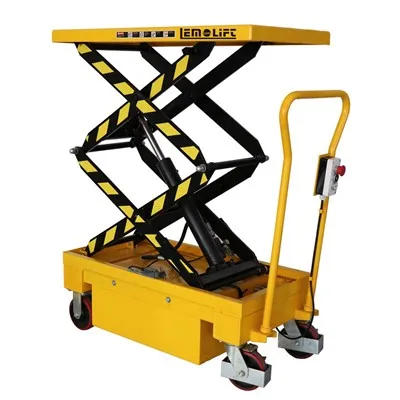


Semi Electric Lift Table Working Principle:
The lifting motion is generated through an electro-hydraulic actuation process:
A DC motor (12V / 24V) drives a hydraulic pump
Hydraulic oil is pressurized into the cylinder chamber
The cylinder extends and pushes the scissor arms
The scissor structure converts linear force into vertical platform displacement
Lowering is controlled via a release valve, allowing oil to return to the tank
Movement is manual:
The unit is pushed via handle
Load positioning depends on wheel type and floor condition
Key engineering constraint:
Lifting force = hydraulic pressure × piston area
Stability depends on scissor geometry and load distribution
Semi Electric Lift Table System Composition
Mechanical Structure
Scissor Arms (Q235 / Q345 Structural Steel)
Scissor arms are formed from Q235 or Q345 steel plates into a crossed linkage. Thickness and pivot spacing are calculated based on load and lift height to control bending stress. Machined pin joints reduce clearance and maintain alignment during repeated lifting cycles.
Platform (Anti-Slip Steel Plate)
The platform uses patterned steel plate to increase friction during load placement. Plate thickness is selected according to load type and distribution. Reinforcement ribs under the platform limit deformation when handling pallets or uneven loads.
Base Frame (Welded Steel Structure)
The base frame is a welded steel structure providing support for the lift system. It integrates mounting points for scissor arms, wheels, and hydraulic units. Frame flatness and weld consistency are controlled to maintain lifting stability.
Hydraulic System
Hydraulic Cylinder (Single / Double Acting)
The hydraulic cylinder converts oil pressure into lifting force. Bore size and stroke are selected based on required load and height. Sealing components are specified to maintain pressure stability and prevent leakage during continuous operation.
Pump Unit (Integrated / External)
The pump unit generates hydraulic pressure through a DC motor. Integrated designs combine motor and tank, while external units allow easier service. Flow rate is matched to lifting speed requirements and system load.
Oil Tank and Valve Block
The oil tank stores hydraulic fluid and supports continuous circulation. The valve block controls flow direction and pressure. A release valve regulates descent speed and prevents sudden drop during lowering.
Electrical System
DC Motor (12V / 24V)
The DC motor drives the hydraulic pump. Voltage selection depends on load capacity and duty cycle. Motor output and thermal limits are defined to support repeated lifting without overheating.
Battery (Lead-Acid / Lithium Optional)
The battery supplies power to the motor system. Capacity is selected based on lifting frequency and operating time. Lithium batteries reduce weight and support faster charging compared to lead-acid types.
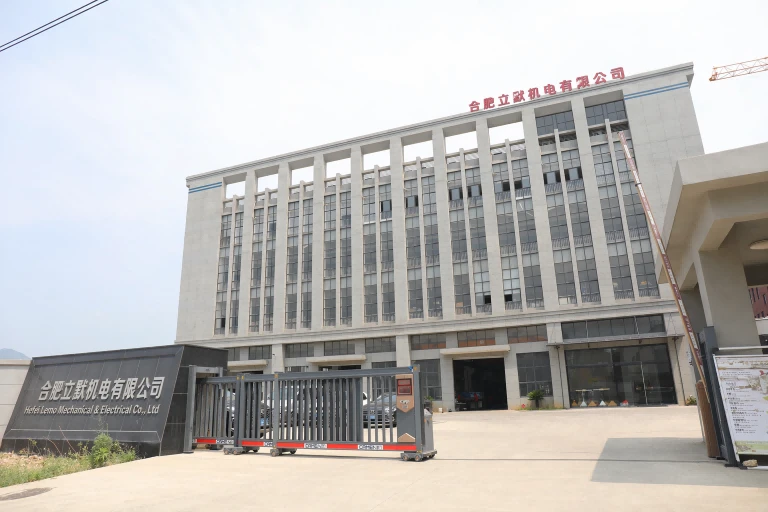
Semi Electric Lift Table Engineering & Design Capability
Lemo provides parameter-driven design based on application constraints.
Load capacity (kg)
Lift height (mm)
Platform size (mm)
Duty cycle (cycles/hour)
Floor condition (smooth / uneven)
Design Outputs:
Cylinder bore and stroke calculation
Scissor arm thickness and pivot stress check
Pump power selection
Stability factor under offset load
Limo Semi Electric Lift Table Manufacturing Capability
Engineering-driven production system covering design, fabrication, assembly, and quality control of semi electric lift tables
1. Material Preparation
Steel plates and structural profiles are selected based on design drawings. Thickness, grade (Q235/Q345), and dimensions are verified before processing to ensure load-bearing requirements.
2. CNC Cutting
Steel plates are processed by CNC cutting to achieve defined dimensions for scissor arms, platforms, and base frames. Cutting accuracy affects subsequent assembly alignment.
Welding Fabrication
Scissor arms, base frames, and structural components are welded using robotic or manual welding. Weld seams are controlled to maintain structural strength and dimensional stability.
4. Machining & Finishing
Pin shafts, pivot holes, and connection points are machined to tolerance. Surface finishing is applied to reduce friction and wear at moving joints.
5. System Assembly
Hydraulic components, electrical systems, and mechanical structures are assembled. This includes cylinder installation, wiring, battery integration, and control system setup.
6. Testing & Output Control
Each unit is assembled according to BOM and drawings. Load testing, lifting function checks, and operational verification are performed before shipment.
Applications Of The Semi Electric Lift Table
Industrial manufacturing:
used in factory assembly lines or production workshops to facilitate material handling and height adjustment, improve production efficiency and reduce labor intensity.
01
Warehousing and logistics:
in warehouses or distribution centers, assist in cargo loading and unloading and sorting, optimize space utilization, and improve work fluency.
02
Equipment maintenance:
provides stable lifting support for maintenance and repair, and easily copes with various scenarios such as equipment maintenance and parts replacement.
03
Retail and supermarkets:
suitable for commodity display and inventory management, easily handles cargo storage and retrieval tasks on high shelves, and improves work convenience.
04
FAQ
Q: Is the platform easy to operate?
A: Yes, the semi-electric design combined with manual movement is easy to operate and suitable for flexible use in different environments.
Q: Is the platform customizable?
A: Yes, you can choose different lifting ranges, load capacities and accessory configurations according to your needs.
Q: Does the battery of the equipment require special maintenance?
A: The battery should be charged regularly to avoid long-term non-use and run out of power; please ensure that the battery is stored in a dry and well-ventilated place.
Q: Does the platform have safety protection devices?
A: Yes, the platform is equipped with overload protection, intelligent braking system and anti-tilt device to ensure safe operation.
Q: How to extend the service life of the equipment?
A: Regularly check and lubricate key components, avoid overloading, and keep the platform clean to reduce the impact of external pollution on the equipment.
Q: Do you test each semi electric lift table before shipment?
A: Yes. Every unit is tested after final assembly, including full load lifting, lowering stability, and hydraulic pressure holding. The test verifies whether the system operates within the rated capacity and designed lift height.
Q: What kind of load test do you perform?
A: We perform a static load test at rated capacity and a dynamic lifting cycle test. The platform is loaded to confirm no structural deformation, and the scissor mechanism is checked for stress behavior during repeated lifting cycles.
Q: How do you check hydraulic system quality?
A: The hydraulic system is tested for pressure retention and leakage. After assembly, the cylinder is held under load for a defined period to check seal integrity and valve response during lifting and controlled descent.
Q: What inspections are done during production?
A: Inspection is applied at three stages: incoming material check (steel and components), in-process inspection (welds, machining accuracy), and final assembly inspection (alignment, wiring, and hydraulic function testing).
Q: Do you verify electrical safety before delivery?
A: Yes. The DC motor, battery system, and control switch are tested for start/stop response, voltage stability, and overload behavior. Wiring connections are checked to ensure correct operation under repeated lifting cycles.