Deutsch
 Português
 한국어
 Türkçe
 عربي
 русский
 Việt Nam
 日本語
 Italiano
 Français
 Español

Hey there! As a supplier of pallet truck parts, I've seen my fair share of worn - out components. Pallet trucks are workhorses in warehouses, factories, and distribution centers. But like any machine, their parts wear out over time. In this blog, I'll share some signs that your pallet truck parts might be on their last legs.
1. Unusual Noises
One of the first signs that something's up with your pallet truck is when it starts making strange noises. If you hear grinding, squealing, or clunking sounds, it's a red flag.
Grinding noises usually indicate that there's friction where there shouldn't be. For example, the wheels of the pallet truck might be rubbing against something. It could be that the bearings in the wheels are worn out. Bearings are crucial as they allow the wheels to rotate smoothly. When they're worn, the metal parts start to grind against each other, creating that unpleasant noise.
Squealing sounds can be a sign of a problem with the hydraulic system. The hydraulic pump is responsible for lifting and lowering the forks of the pallet truck. If it's making a high - pitched squeal, it could mean that the pump is running low on hydraulic fluid or that there's an issue with the seals. A leaky seal can let air into the system, which causes the pump to work harder and make that annoying noise.
Clunking noises might suggest that there are loose parts. For instance, the brackets that hold the forks or other components in place could be loose. This is a serious issue as loose parts can cause the pallet truck to malfunction and even pose a safety risk. If you're experiencing any of these noises, it might be time to check out some replacement parts like the 1113 - 210300 - E0 Bracket For EP EPL153.
2. Difficulty in Lifting or Lowering the Forks
The main function of a pallet truck is to lift and move pallets. If you find that it's becoming increasingly difficult to lift or lower the forks, there are a few possible causes.
A common culprit is a problem with the hydraulic system. As mentioned earlier, low hydraulic fluid levels can make it hard for the pump to generate enough pressure to lift the forks. You might also notice that the forks don't lift as high as they used to or that they lower too quickly. This could be due to a faulty hydraulic valve. The valve controls the flow of hydraulic fluid, and if it's not working properly, the lifting and lowering operation will be affected.
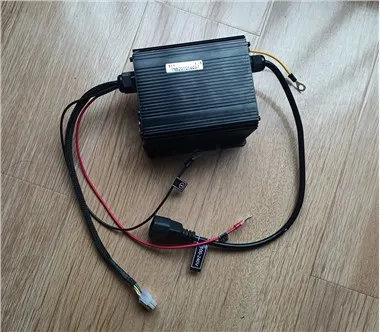
Another reason could be a worn - out motor. In electric pallet trucks, the motor is responsible for powering the hydraulic pump. If the motor is struggling, it won't be able to provide enough power to lift the forks effectively. You might want to consider a replacement motor controller like the EP 1115 - 510004 - 00 - N0 Motor Controller EPT20 - 18EHJ if you suspect an issue with the motor's control.
3. Uneven Movement
When a pallet truck moves smoothly, it should glide in a straight line. But if you notice that it's veering to one side or that the movement is jerky, there's a problem.
Uneven movement can be caused by unevenly worn wheels. If one wheel is more worn than the others, it will affect the balance of the pallet truck. This can make it difficult to steer and control. You might also find that the pallet truck is harder to push or pull in a straight line.
Another possible cause is a problem with the steering mechanism. The steering linkage or the steering wheel components could be worn out. If the steering isn't working properly, it can make the pallet truck difficult to maneuver, which slows down your operations.
4. Visible Wear and Tear
Sometimes, the signs of worn - out parts are right in front of your eyes. Check the forks of the pallet truck for any signs of bending, cracking, or excessive rust. Forks are under a lot of stress as they lift heavy pallets, so they're prone to damage. A bent fork can't lift pallets properly, and a cracked fork is a major safety hazard as it could break under the weight of a load.
The paint on the pallet truck can also give you clues. If you see areas where the paint is chipped or peeling, it might be a sign that the metal underneath is starting to rust. Rust weakens the structure of the pallet truck and can lead to more serious problems over time.
The hydraulic hoses are another area to inspect. Look for any signs of cracking, bulging, or leaking. A damaged hydraulic hose can cause a loss of hydraulic pressure, which affects the lifting and lowering function of the pallet truck.
5. Electrical Issues (for Electric Pallet Trucks)
If you're using an electric pallet truck, electrical problems can be a sign of worn - out parts. For example, if the pallet truck won't start or if the controls are unresponsive, it could be due to a faulty battery, motor, or electrical connections.
A dead battery is an obvious cause, but if the battery is relatively new and still not working, it could be that the charger isn't working properly or that there's an issue with the battery terminals. Loose or corroded terminals can prevent the battery from charging or discharging correctly.
The motor controller is also a critical component. If it's malfunctioning, the motor might not receive the right amount of power, causing the pallet truck to operate erratically. That's where a quality motor controller like the EP 1115 - 510004 - 00 - N0 Motor Controller EPT20 - 18EHJ comes in handy.
6. Slow Response Time
If your pallet truck is taking longer than usual to respond to your commands, it's a sign that something's off. For example, when you press the button to lift the forks, there's a delay before they start moving. This could be due to a problem with the control system or the hydraulic system.
In the control system, the sensors and switches that detect your commands might be worn out. They might not be sending the signals to the motor or the hydraulic pump quickly enough. In the hydraulic system, as mentioned before, low fluid levels or a faulty pump can cause a slow response time.
7. Safety Features Malfunctioning
Pallet trucks come with several safety features, such as emergency stop buttons and overload protection. If these features aren't working properly, it's a major concern.


The emergency stop button is designed to stop the pallet truck immediately in case of an emergency. If it doesn't work, it puts the operator at risk. Overload protection is there to prevent the pallet truck from being overloaded, which can cause damage to the machine and pose a safety hazard. If the overload protection isn't functioning, it could lead to the pallet truck breaking down under excessive weight.
Conclusion
Keeping an eye out for these signs of worn - out parts can save you a lot of time and money in the long run. By identifying and replacing faulty parts early, you can prevent major breakdowns and keep your pallet truck running smoothly.
If you're facing any of these issues with your pallet truck, we're here to help. We're a leading supplier of pallet truck parts, and we have a wide range of high - quality products. Whether you need a motor controller, a DC contactor like the 1113 - 500006 - 10 DC Contactor For EP EPT12 - EZ, or a bracket, we've got you covered.
Don't hesitate to reach out to us for a quote or to discuss your specific needs. We're always happy to assist you in finding the right parts for your pallet truck and getting your operations back on track.
References
- Industrial Equipment Maintenance Handbook
- Pallet Truck User Manuals
- Hydraulic Systems Basics Guides