Deutsch
 Português
 한국어
 Türkçe
 عربي
 русский
 Việt Nam
 日本語
 Italiano
 Français
 Español

Hey there, fellow forklift enthusiasts! As a long - time forklift parts supplier, I've seen my fair share of forklift issues. One of the most critical components of a forklift is its transmission. A failing forklift transmission can spell big trouble for your operations, leading to costly downtime and repairs. In this blog, I'll share the signs that your forklift's transmission might be on the fritz.
1. Unusual Noises
One of the first things you might notice when the transmission is failing is strange noises. When you're driving the forklift, you might hear grinding, whining, or clunking sounds. Grinding noises usually indicate that there's metal - to - metal contact inside the transmission. This could be due to worn - out gears or bearings. Whining noises, on the other hand, often suggest low transmission fluid or a problem with the pump. Clunking sounds when shifting gears are also a red flag. It could mean that the shift linkage is loose or that there's an issue with the clutch.
If you hear any of these noises, it's important to address the problem as soon as possible. Ignoring them can lead to more severe damage and even complete transmission failure. And trust me, you don't want to deal with that headache!
2. Difficulty Shifting Gears
Another tell - tale sign of a failing transmission is difficulty shifting gears. You might find that it's hard to get the forklift into gear, or that the gears slip out when you're driving. If it's difficult to engage a gear, it could be because the clutch isn't disengaging properly or there's a problem with the shift forks. Gear slippage is even more concerning. It means that the transmission isn't able to hold the selected gear, which can be extremely dangerous, especially when you're carrying heavy loads.
When you experience gear - shifting problems, it's a good idea to check the transmission fluid level first. Low fluid can cause the gears to slip. If the fluid is at the correct level, then there's likely an internal issue with the transmission that needs to be fixed.
3. Leaking Transmission Fluid
Transmission fluid is essential for the proper operation of the forklift's transmission. It lubricates the moving parts, cools the system, and helps with gear shifting. If you notice a puddle of red or brown fluid under the forklift, it's a sign that there's a leak in the transmission. The fluid might be leaking from a damaged seal, gasket, or a cracked transmission case.
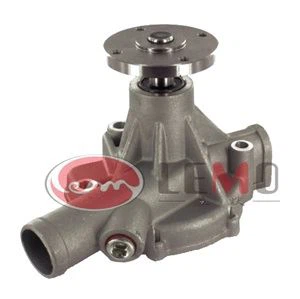
Low transmission fluid due to a leak can lead to overheating and increased wear on the transmission components. So, if you see a leak, don't delay. Find the source of the leak and replace the damaged parts. And if you're in need of replacement parts, we've got you covered! For example, we offer high - quality parts like the Water Pump Gwn - 30A 21010 - L1100 21010 - L1125 21010 - L1123 21010 - L1126 21010 - 21100 21010 - B8525 which can be crucial for maintaining the proper fluid circulation in the forklift.
4. Burning Smell
A burning smell coming from the forklift can also indicate a transmission problem. This smell is often caused by overheating transmission fluid. When the fluid gets too hot, it starts to break down, and the transmission components can start to burn. Overheating can be due to a variety of reasons, such as low fluid, a clogged filter, or a malfunctioning cooling system.
If you smell something burning, stop the forklift immediately and let it cool down. Check the transmission fluid level and look for any signs of leaks. If the problem persists, it's best to have a professional take a look at it.
5. Delayed Engagement
When you put the forklift in gear, there should be a relatively quick and smooth engagement. However, if you notice a delay between shifting into gear and the forklift actually moving, it's a sign of a transmission issue. This delay could be caused by a variety of factors, including low fluid, a worn - out clutch, or a problem with the solenoids.
Delayed engagement can make the forklift difficult to operate, especially in busy warehouses where you need to move quickly. So, if you experience this problem, it's important to get it fixed right away.
6. Transmission Slipping
We briefly touched on gear slippage earlier, but it's such an important issue that it deserves its own section. Transmission slipping is when the forklift seems to lose power while you're driving, even though you're pressing the accelerator. You might notice that the engine revs up, but the forklift doesn't speed up as it should. This is a serious problem because it can lead to a loss of control, especially when going up a ramp or carrying a heavy load.
Transmission slipping can be caused by worn - out clutch plates, low transmission fluid, or a damaged torque converter. If you suspect that the transmission is slipping, it's crucial to have it inspected and repaired as soon as possible.
7. Warning Lights on the Dashboard
Many modern forklifts are equipped with dashboard warning lights that can indicate a transmission problem. If you see a warning light that looks like a gear or has the word "Transmission" on it, don't ignore it. This is the forklift's way of telling you that there's an issue with the transmission.
The warning light could be triggered by a variety of problems, such as low fluid, overheating, or a sensor malfunction. When the warning light comes on, you should refer to the forklift's manual to see what it means. In most cases, it's a good idea to stop using the forklift and have it checked by a professional.
8. Erratic Performance
Finally, if the forklift's performance is erratic, it could be a sign of a failing transmission. You might notice that the forklift accelerates and decelerates unevenly, or that it jerks when you're driving. This erratic behavior can make the forklift difficult to control and can be dangerous for the operator.
Erratic performance can be caused by a variety of transmission problems, including issues with the shift control module, sensors, or the hydraulic system. It's important to address these issues promptly to ensure the safety and efficiency of your forklift operations.
Conclusion
As you can see, there are several signs that your forklift's transmission might be failing. If you notice any of these symptoms, it's crucial to take action right away. Ignoring the problem can lead to more severe damage and costly repairs.
At our forklift parts supply business, we understand how important it is to keep your forklifts in top - notch condition. That's why we offer a wide range of high - quality parts, including the Dust Cover Black Soft for SB175 Connector and the Toyota 16120 - 78151 - 71 Forklift Water Pump. Whether you need a small part or a complete transmission overhaul kit, we've got you covered.

If you're experiencing any of the transmission problems we've discussed in this blog, or if you just need some advice on which parts to buy, don't hesitate to reach out to us. We're here to help you keep your forklifts running smoothly and efficiently. Contact us today to start the conversation about your forklift parts needs!
References
- "Forklift Maintenance Manuals" - Various forklift manufacturers
- "Transmission Repair Guides" - Automotive and industrial repair literature