Deutsch
 Português
 한국어
 Türkçe
 عربي
 русский
 Việt Nam
 日本語
 Italiano
 Français
 Español

Forklifts are indispensable workhorses in warehouses, distribution centers, and industrial settings worldwide. At the heart of a forklift's lifting mechanism lies the mast channel, a crucial assembly that enables the vertical movement of the forks and the load. As a trusted forklift parts supplier, I am here to shed light on the various components that make up the forklift mast channel and their significance in ensuring smooth and efficient operation.
Inner Mast Channel
The inner mast channel is the innermost part of the mast assembly. It is typically the component that moves up and down within the outer mast channel. Constructed from high - strength steel, the inner mast channel is designed to withstand the heavy loads that forklifts carry. Its smooth interior surface allows for the easy movement of the carriage, which holds the forks. The inner mast channel is also equipped with rollers or slides that facilitate its vertical travel. These rollers are precision - engineered to reduce friction and ensure a stable lift. For example, in a busy warehouse where forklifts are constantly in use, a well - functioning inner mast channel is essential to prevent delays in the loading and unloading process.
Outer Mast Channel
The outer mast channel serves as the structural framework for the entire mast assembly. It provides support and stability to the inner mast channel as it moves up and down. The outer mast channel is firmly attached to the forklift's frame. It is usually wider and more robust than the inner mast channel to handle the forces exerted during lifting operations. In addition, the outer mast channel often contains guide rails that keep the inner mast channel aligned during its vertical movement. This alignment is crucial for preventing the mast from binding or tilting, which could lead to dangerous situations. For instance, in a large - scale distribution center, a properly aligned outer mast channel ensures that forklifts can operate safely at high - speed, maximizing productivity.
Carriage
The carriage is an important part of the mast channel system. It is the component that holds the forks and is attached to the inner mast channel. The carriage can be adjusted to different widths to accommodate various load sizes. It is designed to move smoothly along the inner mast channel, allowing the forks to be raised and lowered precisely. The carriage is also equipped with hydraulic cylinders that control its movement. These cylinders are powered by the forklift's hydraulic system, which provides the necessary force to lift heavy loads. For example, when handling pallets of different sizes, the adjustable carriage allows the forklift operator to position the forks accurately, ensuring a secure grip on the load.
Forks
The forks are the most visible part of the forklift mast channel assembly. They are the components that actually come into contact with the load. Forks are available in various lengths, widths, and capacities to suit different applications. They are typically made of forged steel for maximum strength and durability. The forks are attached to the carriage and can be tilted forward or backward to facilitate the loading and unloading of goods. In a manufacturing facility, where different types of products need to be moved, having the right set of forks is essential for efficient material handling.


Hydraulic Cylinders
Hydraulic cylinders are the powerhouses of the forklift mast channel. They are responsible for providing the force needed to lift and lower the inner mast channel, carriage, and load. There are usually two main types of hydraulic cylinders in a forklift mast: lift cylinders and tilt cylinders. Lift cylinders are used to raise and lower the mast, while tilt cylinders are used to tilt the forks forward or backward. These cylinders operate based on the principles of hydraulics, where a fluid (usually oil) is pressurized to generate force. For example, in a cold storage warehouse, hydraulic cylinders need to be able to function effectively in low - temperature environments. High - quality hydraulic cylinders ensure reliable operation even under challenging conditions.
Rollers and Bearings
Rollers and bearings play a vital role in the smooth operation of the forklift mast channel. Rollers are used to guide the movement of the inner mast channel within the outer mast channel and the carriage along the inner mast channel. They reduce friction and wear, allowing for a more efficient and quiet operation. Bearings, on the other hand, are used to support rotating parts, such as the axles of the rollers. They help to distribute the load evenly and prevent premature failure. In a forklift that is used in a rough - terrain environment, durable rollers and bearings are essential to withstand the vibrations and shocks.
Chains and Sprockets
Chains and sprockets are used in the mast channel to transfer the motion from the hydraulic cylinders to the inner mast channel and the carriage. The chains are typically made of high - strength steel and are designed to withstand the high tension forces during lifting operations. Sprockets are the toothed wheels that engage with the chains. They are precision - machined to ensure a smooth transfer of power. Chains and sprockets work together to provide a reliable and efficient lifting mechanism. For example, in a large - scale construction site, where forklifts are used to move heavy building materials, well - maintained chains and sprockets are crucial for the safe and efficient operation of the forklifts.
Importance of Quality Parts
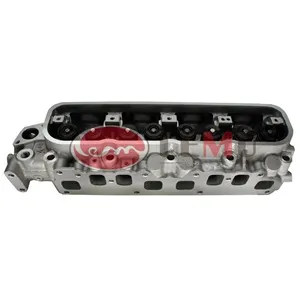
As a forklift parts supplier, I understand the importance of providing high - quality parts for the mast channel. Using sub - standard parts can lead to a variety of problems, including reduced performance, increased maintenance costs, and safety hazards. For example, a worn - out roller can cause the inner mast channel to bind, leading to uneven lifting and potential damage to the load. On the other hand, high - quality parts, such as Toyota 4Y Cylinder Head 11101 - 76017 - 71, 11101 - 73020 - 71, 111017601771, 111017302071, 11040 - FY501 91H20 - 00310 Cylinder Head 11040 - FY502, and Master Cylinder 3EB - 36 - 31281 3EB - 36 - 31280, are designed to meet or exceed the original equipment manufacturer's specifications. They are rigorously tested to ensure long - term reliability and performance.
Maintenance of Mast Channel Parts
Regular maintenance of the forklift mast channel parts is essential for their longevity and proper functioning. This includes inspecting the chains, rollers, and bearings for wear and tear, lubricating moving parts, and checking the hydraulic cylinders for leaks. For example, a daily pre - shift inspection can help identify any potential problems early on, preventing costly breakdowns. In addition, replacing worn - out parts in a timely manner is crucial. For instance, if a roller shows signs of excessive wear, it should be replaced immediately to avoid further damage to the mast channel.
Conclusion
In conclusion, the forklift mast channel is a complex and critical assembly that consists of several important parts. Each part plays a unique role in ensuring the safe, efficient, and reliable operation of forklifts. As a forklift parts supplier, I am committed to providing high - quality mast channel parts that meet the diverse needs of our customers. Whether you are operating a small warehouse or a large - scale industrial facility, having access to top - notch forklift mast channel parts is essential for maximizing productivity and minimizing downtime.
If you are in need of forklift mast channel parts or have any questions about our products, please feel free to contact us. We are here to assist you in finding the right parts for your forklift and ensuring that your operations run smoothly.
References
- "Forklift Operator's Manual", Various Manufacturers
- "Hydraulic Systems in Forklifts", Industrial Hydraulics Journal
- "Steel and Its Applications in Forklift Manufacturing", Metalworking Magazine