
 Deutsch
 Português
 한국어
한국어 Türkçe
 عربي
عربي  русский
  Việt Nam
 日本語
日本語 Italiano
 Français
 Español
Forklifts are key handling equipment in modern logistics systems, specifically designed for loading and unloading, stacking, and short-distance transport of palletized goods. Their wheeled structure makes them suitable for a variety of settings, including ports, freight hubs, production facilities, and warehouse centers. They can perform cargo transfer tasks in enclosed spaces such as ship holds, railway wagons, and containers, serving as a fundamental support system for pallet transport and container operations. There is a wide variety of forklifts available on the market, and this article will assist you in selecting the appropriate solution based on product overview, performance features, and product applications.
Forklifts can generally be divided into eight categories:
1.Pallet forklift

1.1 What is a pallet forklift?
Pallet trucks are logistics equipment designed for flatbed material handling. They are combined with electric or manual drive systems and are divided into Hand Truck For Pallets rely on manual hydraulic systems to lift goods. They are suitable for light loads and short distance transportation. They are low cost and do not require electrical support. Pallet Jack Electricis equipped with an electric motor drive and EPS (electric power steering system), can carry 1.2-1.5 tons of cargo, is suitable for high-intensity, long-distance operations, and complies with international safety certifications such as CE[4][6]. and Semi Electric Pallet Truckscombines manual lifting and electric drive to balance efficiency and cost, and is suitable for medium-demand scenarios.They are common handling tools in warehousing and logistics.
1.2 Features of pallet forklift truck
Super maneuverability: The minimum turning radius is 1.2 meters, and it can be flexibly operated in a narrow lane with a width of 1.5 meters.
Dual-mode drive system: supports both electric and manual drive modes to meet the needs of different scenarios.
Safe and anti-slip design: It uses serrated rubber wheels to increase the braking force on slippery ground.
Efficient load capacity: The standard load range is between 1.5 and 3 tons, compatible with European and American standard pallets.
1.3 Application of pallet trucks
Material turnover in production workshops.
Loading and unloading operations on logistics platforms.
Short-distance cargo handling.
Flat cargo shifting in supermarket warehouses.
1.4 Purchase suggestions
It is recommended to choose an electric model with an electronic steering power system to reduce the physical exertion of operators.
Pay attention to the matching of pallet specifications and fork sizes to ensure handling efficiency.
2.Stacker Forklift

2.1 What is a Stacker Forklift?
Stacker forklift are also available in Manual Stacker Pallet Truck, Electric Stacker Forklift and Semi Electric Stacker Truck. They are industrial vehicles designed specifically for vertical stacking operations. They have a lifting mast that can lift the load to a high place, making efficient use of vertical space. Unlike traditional forklifts, stacking forklifts usually have a more compact design, allowing them to fit into narrow aisles. They are equipped with front forks and a bracket that moves vertically along the mast to accurately place the goods on the shelf (rack) or pallet rack. These machines can increase productivity and optimize storage capacity in confined spaces.
2.2 Features of stacker forklift truck
Precise positioning system: the fork can move sideways by 150mm, and the error is controlled within ±2mm.
Optimized space utilization: the lifting height can reach 6 meters, and the channel width only needs 1.8 meters.
High operating efficiency: the daily processing capacity of a single machine reaches 300 pallets.
Safety protection device: equipped with dual laser obstacle detection and gantry tilt protection.
2.3 Application of forklift pallet stacker
E-commerce warehousing.
Medium-sized shelf warehouse.
Auto parts three-dimensional warehouse.
Food cold chain warehouse (need to choose the low temperature applicable version).
3.Counterbalanced forklift

3.1 What is a counterbalanced forklift?
The Counterbalance Electric Pallet Stacker has a counterbalance system, which is essential for maintaining stability when lifting and moving heavy objects. This design enables it to bear considerable weight without tipping over. Suitable for outdoor high-intensity operations, it can work efficiently in various terrains and weather conditions. It has powerful functions and reliability, allowing enterprises to streamline operations and improve productivity.
3.2 Performance highlights
Power system: Two options are available: turbocharged diesel engine (8 tons load capacity) and lithium battery version (8 hours endurance).
Intelligent safety control: OPS seat sensing system, and automatic parking function.
Adapt to complex terrain: Climbing ability reaches 15%, and the tire design has a self-cleaning function.
3.3 Application Of counterbalanced forklift truck
Port container yard operations.
Iron and steel metallurgical raw material yard handling.
Material handling in heavy machinery manufacturing workshops.
4.Reach forklift

4.1 What is a Reach forklift?
Reach Truck Forklifts is equipped with a telescopic arm system that is different from other forklifts. It is able to access goods in hard-to-reach areas, such as high racks in warehouses. Reach Truck Fork Lift can efficiently retrieve pallets from high-bay storage locations without taking up too much floor space. They have greater reach and flexibility than ordinary forklifts. They can work in narrow aisles, making the most of limited space. Their design allows for precise lifting and placement of heavy objects, improving productivity and safety in operations where vertical storage is critical.
4.2 Technical features of forklift reach truck
Three-dimensional working ability: horizontal extension can reach up to 7.2 meters, and it also has vertical lifting function.
Intelligent working condition perception: It has wind speed warning (automatic speed limit when >13m/s) and automatic leveling system.
Multi-accessory compatibility: supports 15 expansion modules such as forks, hooks, and aerial work platforms.
4.3 Application of forklift and reach truck
Shipyard block outfitting operations.
Steel structure plant component installation.
Material lifting at emergency rescue sites.
5.Order Picker
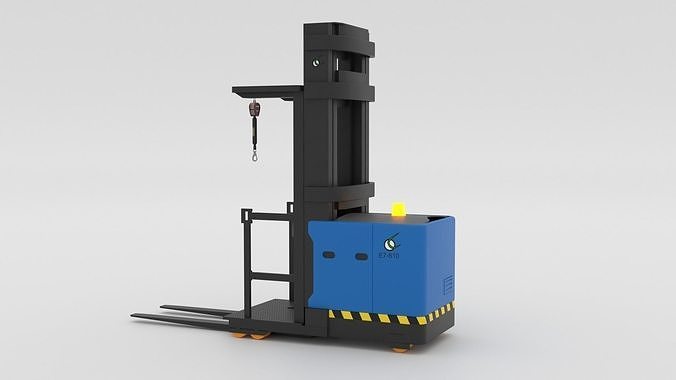
5.1 What is Order Picker?
Order Picker is designed for order picking operations. Its unique feature is that it is equipped with a lifting platform. This design allows operators to easily reach goods on shelves at different heights, greatly improving picking efficiency. It shuttles between shelves, accurately locates the location of goods, and quickly completes the picking task. With its efficient and flexible characteristics, Order Picker has become an indispensable equipment for modern warehousing and logistics to improve operating efficiency and reduce labor costs.
5.2 Features and Advantages
Efficient picking: improve picking efficiency and reduce operator movement.
Ergonomic design: reduce operator fatigue.
Accurate positioning: ensure picking accuracy.
5.3 Application of Order Picker
Order picking in distribution centers.
Inventory management in retail warehouses.
Warehousing logistics for e-commerce.
6.Rough Terrain Forklift
6.1 What is Rough Terrain Forklift?
Rough terrain forklifts are industrial vehicles designed specifically for operating on uneven and challenging terrain, such as construction sites, lumber yards, and other areas without paved roads. They feature large pneumatic tires with deep treads that allow them to safely travel over rough terrain without slipping or shifting. Modern rough terrain forklifts also prioritize worker safety, offering enclosed cabs for operators. These versatile machines are essential for industries that require maneuverability and stability in harsh environments.

6.2 Features and Advantages
Strong off-road capability: adapt to various complex terrains.
High load capacity: suitable for the handling of heavy goods.
Four-wheel drive: provides stable traction.
6.3 Application
Material handling at construction sites.
Operations in mines and quarries.
Material transportation in agriculture and forestry.
7.Heavy-Duty Forklift

7.1 What is a Heavy-Duty Forklift?
A heavy-duty forklift is an industrial handling tool designed for carrying extremely heavy goods and equipment. It has a strong carrying capacity and can adapt to various complex and harsh working environments. With the vigorous development of the logistics and warehousing industries, the demand for heavy-duty forklifts continues to grow, providing a broad market space for enterprises. Technological progress and innovation, and the rise of electric forklifts are driving the upgrading of the heavy-duty forklift market, making it more efficient, intelligent, and environmentally friendly. For enterprises and investors, it is crucial to have a deep understanding of the definition, classification, and trends of the heavy-duty forklift market, which will help them seize market opportunities and formulate reasonable development strategies and investment plans.
7.2 Features and Advantages
High load capacity: usually capable of carrying tens of tons of goods.
Sturdy and durable: suitable for long-term high-intensity operations.
Multiple drive modes: adapt to different working environments and requirements.
7.3 Application
Material handling in heavy machinery manufacturing plants.
Container loading and unloading at ports and docks.
Equipment transportation in the energy and chemical industries.
8.Telescopic Handler

8.1 What is a Telescopic Handler?
Telescopic Handler is a telescopic loader with an extendable arm that is used for a variety of material handling and operations. It is a versatile piece of equipment. Many industries rely on telehandlers for their efficient material handling capabilities. The lifting capacity and reach may vary from model to model, but overall, they play a vital role in streamlining operations that require moving materials.
8.2 Features and Advantages
Telescopic arm design: provides a flexible operating range.
High lifting capacity: suitable for high-altitude operations and heavy cargo handling.
Versatile attachments: supports a variety of operating tools, such as forks, hooks, etc.
8.3 Application
Material handling and installation at construction sites.
Material transportation and operations in agriculture and horticulture.
Material lifting and handling at rescue and emergency sites.


