
 Deutsch
 Português
 한국어
한국어 Türkçe
 عربي
عربي  русский
  Việt Nam
 日本語
日本語 Italiano
 Français
 Español
Forklifts are essential workhorses in warehouses, construction sites, and various industrial settings. These mighty machines rely on a complex system of mechanical parts to function efficiently and safely. As a forklift parts supplier, I have a deep understanding of these components and their working principles. In this blog post, I'll explore the key mechanical parts in a forklift and how they work together to make these machines operate smoothly.
1. Mast Assembly
The mast assembly is one of the most recognizable parts of a forklift. It is responsible for raising and lowering the load. The mast consists of a series of interlocking channels and hydraulic cylinders.

Working Principle:
- Hydraulic Power: The mast is powered by hydraulic cylinders. When hydraulic fluid is pumped into the cylinders, the pistons inside the cylinders move, causing the mast sections to extend or retract. This vertical movement allows the forklift to lift or lower the forks and the load they carry.
- Interlocking Sections: Most forklift masts have multiple sections that can telescope one inside the other. This design enables the mast to reach greater heights while maintaining stability. The interlocking channels guide the movement of the mast sections and prevent them from shifting or swaying during operation.
2. Forks and Attachments
The forks are the primary load - carrying component of a forklift. They are designed to slide under pallets or other loads and lift them off the ground. Additionally, there are various attachments available that can be used in place of or in conjunction with the forks, such as clamps, rotators, and side shifters.
Working Principle:
- Placement and Engagement: The forks are attached to the carriage, which is mounted on the mast. The operator maneuvers the forklift to position the forks under the load. Once the forks are properly placed, the mast is raised, and the forks lift the load off the ground.
- Attachments: Different attachments work in different ways. For example, a clamp attachment uses hydraulic pressure to squeeze and hold the load, which is useful for handling non - palletized items like drums or boxes. A side shifter allows the operator to move the forks horizontally without having to reposition the entire forklift, enhancing maneuverability and load placement accuracy.
3. Hydraulic System
The hydraulic system is the heart of a forklift's lifting and moving capabilities. It consists of a hydraulic pump, hydraulic cylinders, control valves, and hydraulic fluid.
Working Principle:
- Hydraulic Pump: The hydraulic pump is driven by the forklift's engine or electric motor. It draws hydraulic fluid from a reservoir and pressurizes it. The pressurized fluid is then sent through a series of hoses and pipes to the hydraulic cylinders.
- Control Valves: Control valves regulate the flow of hydraulic fluid to the cylinders. The operator uses levers or buttons in the forklift's cab to operate the control valves. By opening or closing these valves, the operator can control the direction and speed of the cylinder movement, which in turn controls the lifting, lowering, and tilting of the mast and forks.
- Hydraulic Cylinders: As mentioned earlier, hydraulic cylinders convert the hydraulic pressure into mechanical force. The pressurized fluid enters one end of the cylinder, pushing the piston and causing it to move. The movement of the piston is then transferred to the mast or other components, resulting in the desired action.
4. Transmission and Drivetrain
The transmission and drivetrain are responsible for transferring power from the forklift's engine or motor to the wheels, allowing the forklift to move forward and backward.
Working Principle:
- Transmission: Forklifts can have either manual or automatic transmissions. In a manual transmission, the operator uses a clutch and gears to change the speed and direction of the forklift. In an automatic transmission, the transmission system automatically adjusts the gear ratio based on the speed and load.
- Drivetrain: The drivetrain includes the drive axles, differential, and driveshafts. The power from the transmission is sent to the drive axles, which rotate the wheels. The differential allows the wheels on the same axle to rotate at different speeds when turning, ensuring smooth and stable operation.
5. Braking System
The braking system is crucial for the safety of the forklift and its operator. It is used to slow down and stop the forklift when needed.
Working Principle:
- Friction Brakes: Most forklifts use friction brakes, which work by applying pressure to the brake pads or shoes, causing them to rub against the brake drums or rotors. This friction creates a force that opposes the rotation of the wheels, slowing down or stopping the forklift.
- Hydraulic or Mechanical Actuation: The brakes can be actuated either hydraulically or mechanically. In a hydraulic braking system, the operator presses the brake pedal, which activates a master cylinder. The master cylinder sends hydraulic fluid to the brake calipers or wheel cylinders, applying pressure to the brake pads or shoes. In a mechanical braking system, the brake pedal is connected to the brake mechanism by a series of rods and cables.
We supply a high - quality Master Cylinder 91346 - 10300 For Mitsubishi Forklift that ensures reliable braking performance for Mitsubishi forklifts.
6. Electrical System
The electrical system in a forklift powers the lights, horn, control panels, and other electrical components. It also includes the battery, alternator (in engine - powered forklifts), and wiring.
Working Principle:
- Battery Power: Electric forklifts are powered by a large battery. The battery supplies electrical energy to the electric motor, which drives the forklift. The battery is also used to power other electrical components.
- Charging and Electrical Generation: In engine - powered forklifts, the alternator is driven by the engine. The alternator generates electricity to charge the battery and power the electrical components when the engine is running. The electrical system is connected by a network of wiring, which distributes the electrical power to the various components.
7. Engine or Motor
The engine or motor is the power source of the forklift. Forklifts can be powered by internal combustion engines (such as gasoline, diesel, or liquefied petroleum gas - LPG) or electric motors.
Working Principle:
- Internal Combustion Engines: In an internal combustion engine, fuel is mixed with air, compressed, and ignited. The explosion that occurs during combustion forces the pistons to move, which in turn rotates the crankshaft. The rotational energy of the crankshaft is then transferred to the transmission and drivetrain to power the forklift.
- Electric Motors: Electric motors convert electrical energy from the battery into mechanical energy. When an electric current is applied to the motor, it creates a magnetic field that causes the motor's rotor to rotate. The rotation of the rotor is then transferred to the drivetrain to move the forklift.
We offer the Mitsubishi CM400DU - 12F CM400DU12F IGBT Module, which is an important component for the electrical control system in some Mitsubishi forklifts.
8. Cooling System
The cooling system is used to prevent the engine or motor from overheating. It is especially important in forklifts that are used for extended periods or in high - temperature environments.
Working Principle:
- Radiator and Fan: The cooling system typically includes a radiator, a water pump, and a fan. The water pump circulates coolant (usually a mixture of water and antifreeze) through the engine or motor and the radiator. As the hot coolant passes through the radiator, the fan blows air over the radiator fins, dissipating the heat. The cooled coolant then returns to the engine or motor to absorb more heat.
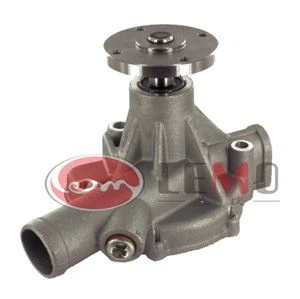
We have a reliable Water Pump Gwn - 30A 21010 - L1100 21010 - L1125 21010 - L1123 21010 - L1126 21010 - 21100 21010 - B8525 in our inventory, which plays a vital role in maintaining the proper temperature of the forklift's engine.
Connect and Purchase
If you're in the market for high - quality forklift parts, I invite you to connect with us. We have a wide range of forklift parts that are designed to meet the highest standards of quality and performance. Whether you need components for routine maintenance or replacement parts for a broken machine, we can provide you with the right solutions. Reach out to us to start a conversation about your forklift parts needs and let's work together to keep your forklifts running smoothly.
References
- "Forklift Operator's Manuals" - Various manufacturers
- "Hydraulics and Pneumatics Handbook"
- "Automotive and Industrial Drivetrain Systems"
